





RO4350B is one of the most widely used laminates in the Rogers RO4000 family. Its resin is a ceramic-filled hydrocarbon system, not PTFE. Rogers' fabrication guidelines allow it to follow most standard FR-4 process steps.
The steps outside "most" decide impedance, hole reliability and edge quality. This guide walks through those adjustments in process order. For the RO4000 versus RO3000 comparison, see our article on Rogers laminate family fabrication differences.
1. Material handling and bake
- Store panels under the conditions Rogers specifies and release them to production soon after cutting.
- Bake before lamination and soldermask to drive out absorbed moisture. Use the conditions in the current Rogers guideline.
- Clean glass and filler dust from panel edges so it does not reach drilling or lamination.
2. Drilling
- The ceramic filler wears drill bits faster than FR-4. Tool life must be set separately; FR-4 hit counts do not transfer.
- Worn bits roughen hole walls and raise exit burrs, and plating inherits both defects.
- Wear grows with small holes in thick boards, so first-article and microsection checks run more often.
3. Desmear and hole metallization
- RO4350B hole walls can go through a conventional desmear and electroless copper line. They do not need the sodium naphthalene or plasma activation PTFE requires.
- Desmear strength still needs evaluation. Over-etching roughens the wall and loosens filler.
- In a hybrid board one hole passes through both RO4350B and FR-4 resin, so desmear settings must suit both.
4. Multilayer and hybrid lamination
- All-RO4350B multilayers usually pair with Rogers RO4400 series prepreg.
- RO4350B can be bonded to FR-4 with FR-4 prepreg. The two materials differ in expansion and resin flow, so the press cycle is reviewed per hybrid build.
- The bonding layer's own Dk and loss enter the impedance calculation. Put prepreg type and thickness on the stackup drawing.
- Warpage and registration in hybrid builds are covered in our hybrid stackup lamination article.
5. Soldermask prep and surface finish
- RO4350B is rigid. Standard brushing or chemical microetch works, unlike PTFE, which stretches under brush pressure.
- State on the drawing whether RF traces are covered by soldermask. Mask changes the effective Dk of a microstrip.
- Surface finish affects insertion loss. Specify it according to the design requirement.
6. Routing and profiling
- RO4350B can be routed and punched much like FR-4. The filler wears router bits faster.
- Manage router bit life separately, or edges chip and burr.
- Dimension the board edge near RF connectors with a stated tolerance.
7. Test and release
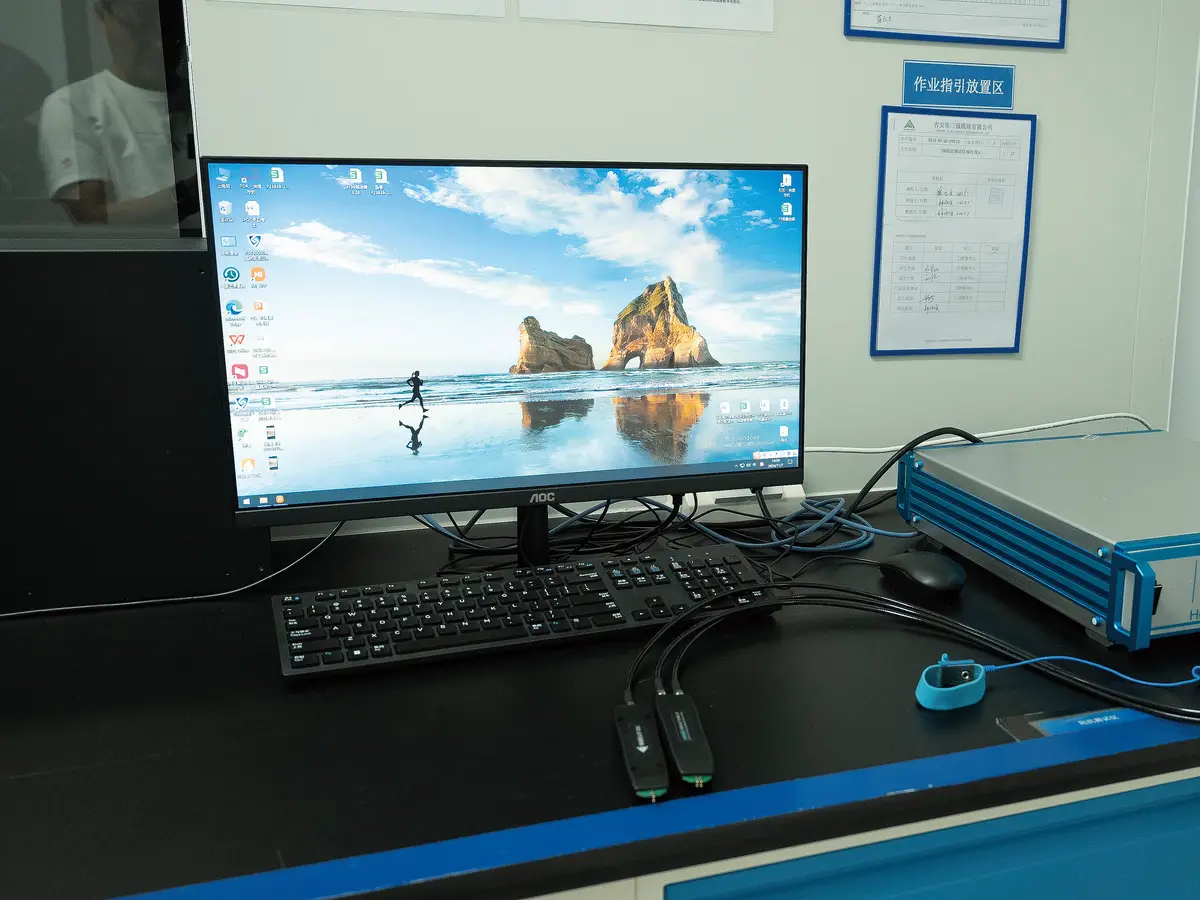
- Impedance is measured by TDR on panel coupons. SKPCB's standard tolerance is ±10%, with ±5% available.
- Every order gets 100% electrical test. Acceptance follows IPC-6012 Class II or Class III.
- Microsections confirm hole wall quality: roughness, nailheading and barrel copper continuity.
8. Material notes the drawing must carry
| Item | What to state |
|---|---|
| Material | RO4350B, and whether substitution is allowed |
| Core thickness | Dielectric thickness, not only overall board thickness |
| Copper foil | Standard ED or low-profile foil |
| Bonding material | RO4400 series or FR-4 prepreg, with part number |
| Layer order | Which layers are RO4350B and which are FR-4 |
| Impedance | Target, tolerance, reference plane and test method |
| Soldermask | Covered or opened over RF traces |
General high-frequency drawing requirements are in our high-frequency PCB fabrication drawing notes.
FAQ
Q: Does RO4350B need a dedicated PTFE line?
A: No. RO4350B is not PTFE, and Rogers' guidelines allow conventional FR-4 hole metallization.
Q: Can RO4350B be laminated with FR-4?
A: Yes. The press cycle is reviewed per build, and the prepreg type goes on the stackup drawing.
Q: Why can't RO4350B use FR-4 drilling settings?
A: The ceramic filler wears bits faster. FR-4 hit counts leave rougher walls and more burrs.
Q: How is impedance verified on an RO4350B board?
A: TDR on panel coupons. SKPCB's standard tolerance is ±10%, with ±5% available.